2010年12月30日星期四

How to Save YouTube Videos on Computer Free

Click Add Task button on the toolbar to open the Add Task window, and copy the URL of the YouTube video you want, then paste it into the "URL" textbox. Set File Name, Save Path etc for the video downloading task.

Tips 1: If you would like to download current YouTube Video you are watching, please right click the mouse at the current video url and choose "Download by YouTube Downloader" from the pop-up menu.

Tips 2: You can also download all videos from the current opened page, just right click the mouse at anywhere of the page then choose "Download All by YouTube Downloader" from the pop-up menu, a window will pop up with all urls detected by this program, you can choose some of them to download by selecting the check box or just select all to download the all videos.

4. Start the YouTube video downloading task.

Use Start, Pause, Stop button to control the video downloading task. After finishing the task, you can find your wanted YouTube video in destination folder.

More info you can visit: Save YouTube video to computer.

2010年12月29日星期三

How to Convert ASF to iPhone on Mac

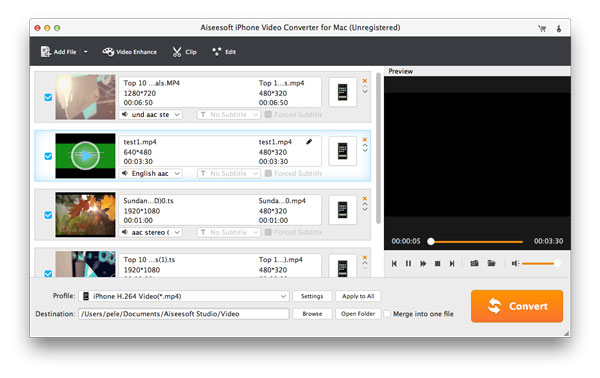
Aiseesoft iPhone Video Converter for Mac is the best Mac ASF to iPhone Converter, which can help you fast convert ASF to iPhone on Mac with excellent video quality. This best ASF to iPhone Converter for Mac also can convert audio file and extract audio from video to iPhone MP3, M4A, etc on Mac.

Follow the instructions below and learn how to step by step convert ASF to iPhone on Mac with Aiseesoft iPhone Video Converter for Mac.

Step 1: Preparation work

Free download this professional Mac ASF to iPhone Video Converter, install and launch.

Step 2: Add any ASF video file from Add File menu.

Step 3: Choose your needed iPhone video format and output destination folder.

Step 4: Click Start button to begin ASF to iPhone conversion on Mac

Within a few minutes, you can enjoy the converted ASF files on your iPhone, iPhone 3G etc.

Tips 1: Aiseesoft iPhone Video Converter for Mac offers merge function to convert several files into a successive one to bring you convenience.

Tips 2: Aiseesoft iPhone Video Converter for Mac provides various video and audio parameters for you to edit, like video encoder, resolution, frame rate, video bitrate, audio encoder, sample rate, channels and audio bitrate.

Tips 3: As powerful ASF to iPhone converter for Mac software, it can convert various video files to iPhone MP3, M4A audio and convert other audio formats to iPhone MP3, M4A file.

Choose Aiseesoft iPhone Video Converter for Mac to fast convert ASF to iPhone on Mac. More information at: Convert ASF to iPhone on Mac.

Please Don’t Read This Year-in-Review-Look-Ahead Piece

Just a few days left in 2010, which means you’re seeing a deluge of year-end look back/look forward pieces.

Please: Don’t read them!*

Do something else with your time instead: Spend a few minutes with someone you like. Call someone you haven’t talked to in a long time. Take a nap. Whatever.

Need convincing? OK. Year in review/New Year’s prediction stories are a waste of time because:

We know what happened in the last 12 months. Really. It wasn’t that long ago. No need to remind us.

We don’t know what’s going to happen in the next 12 months. Why pretend otherwise?

When we do pretend to know what’s going to happen, no one’s paying attention anyway. You’re probably not reading this right now! I’m not — I’m off for the rest of the year, and when I do go online this week, I’m going to try very hard to avoid filler pieces like this.

Because no one’s paying attention, no one ever, ever holds anyone accountable for their errant fortune telling. Check out this guesswork/fantasy from five years ago, for example:

Don’t count out the newspaper business–particularly local papers. Yes, eBay and Craigslist are killing off the classified-ads business, and Google, Yahoo! and others are pulling readers away daily. But someone, somewhere will figure out how to take the one thing local papers still do that their competitors can’t–report on what’s happening in readers’ backyards and make money from it.

Still waiting on that one, Nostradumus. Except we’re not. Who cares what Peter Kafka predicted in a Forbes.com 2005 year-end piece? Certainly not Peter Kafka.

All that said, I do have one year-end thought I’d like to pass along for anyone still reading: Thank you. Thanks for reading what I had to say this year, and thanks for letting me know what’s on your mind, too. See you in 2011.

2010年12月27日星期一

How to Convert MP3 to M4R on Mac

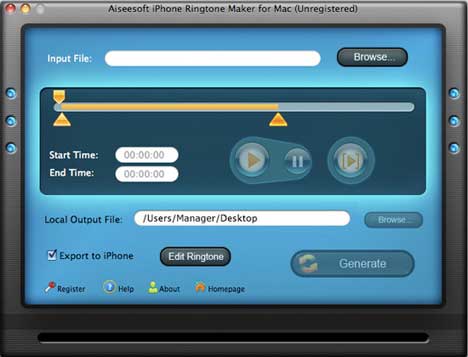
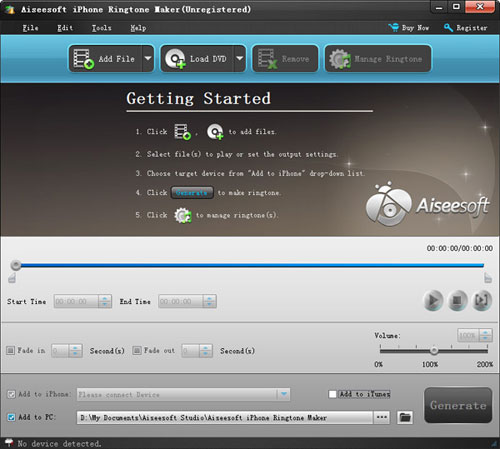
Step 1: Click Browse… on the right side of "Input File" to import the MP3 file that you want to make M4R ringtone from it.

Convert MP3 to M4R on Mac with M4R Converter for Mac

Step 2: Click to listen the music to find the segment that you want to use it as ringtone. Then drag and click the start & end slider to set your wanted segment, or type the start & end time in the corresponding text box directly to get the exact segment. Click to pre-listen the converted audio before generating M4R file.

Step 3: Click Browse… on the right side of "Local Output Folder" to choose the output destination.

Step 4: Check Export to iPhone option, the converted ringtone will be load to your iPhone directly

Step 5: After all the settings are finished, click Generate to begin making your own iPhone M4R ringtone.

Several minutes later, you can enjoy your own M4R ringtone on your iPhone. More information at: Convert MP3 to M4R on Mac.

2010年12月25日星期六

Fashion Community Strutting User-Generated Trends Down the Catwalk

Fashionistas may roll their eyes at the effort, but Polyvore is trying to make designing and merchandising apparel more data driven–and presumably less arbitrary.

To do so, the online fashion community will be crunching user-generated data to roll out analytical tools for designers and retailers. Think Quantcast or Compete, but for the fashion industry.

The beta tool, called Style Analytics, will be free and openly available to anyone on Polyvore’s Web site. It’s expected to launch officially tomorrow afternoon.

The data points are coming from its community of users, who create virtual outfits–or what they call “collages” of clothing–by mixing and matching shirts, pants, dresses, shoes, skirts and accessories from around the Web.

Jess Lee, Polyvore’s co-founder and head of product management, said it will show what’s trending, so brands can make better decisions. Specifically, it shows how consumers associate your brand, for instance, with Abercrombie & Fitch or Juicy Couture.

“The fashion industry, from designing to merchandising and marketing is inefficient and not data driven,” she said. “Our goal is to open it up and make it more democratic and more data driven.”

The Mountain View, Calif.-based company has raised about $8.7 million in venture capital since 2007. Each month, its two million registered users create one million collages that generate 140 million page views.

2010年12月24日星期五

Shhh! The FCC Says It Will Approve Comcast–NBC U Deal

Some non-news from Washington: The Federal Communications Commission says it will approve the Comcast-NBC Universal deal, with some restrictions.

Completists will still need to hear from the Department of Justice, which is also reviewing the transaction, but since both Comcast and NBC announced yesterday that they expected the deal to close in January, it’s hard to imagine there’s much in the way of a surprise coming.

It would be great to tell you what restrictions the FCC wants, but the government agency won’t say so publicly, at least for now.

But since a document with the FCC’s proposed restrictions is currently being circulated to officials at Comcast and GE-owned NBC, the information should get out sooner than later.

The FCC also held a “background” press conference on the deal this morning, in which it asked participants not to quote government officials directly. That’s not uncommon in Washington, but that doesn’t make it any less astonishing: The FCC knows about Twitter, right?

Still, in this case, that works out just fine, since FCC officials didn’t provide direct answers to any questions.

2010年12月22日星期三

How to import video from camcorder to Mac

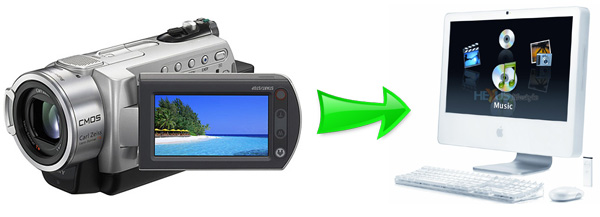
You may be ready to make a movie after you capture great footage with your FireWire camcorder. In this condition, you need import your camcorder to your Mac. More specially, you need to connect your camcorder to your Mac, and then copy footage from the camcorder into iMovie. And when you import video into an iMovie project, it would divide your video into individual clips for the easy editing.

camcorder video to Mac

Part 1. How to Import Video from a Camcorder to your Mac
Step 1: Connect camcorder to your Mac computer with cable (USB/Wifi)
Step 2: Select mode of camcorder such as PC/Computer mode.
Step 3: iMovie will automatic open Import window.
Step 4: If DVD Player automatic open. just quit DVD Player first.
Step 5: So now, you can review your video or select "Import All"(make sure your switch is set to "Automatic").
Step 6: If you select "Manual", you can import some clip to iMovie
Step 7: If you import from Tape based device (DV/HDV), iMovie will automatic revise tape and import all
Step 8: iMovie automatic create thumbnail video after complete import

Part 2. Tips:
iMovie automatically detects your camcorder
iMovie will automatically detect when you have a FireWire camcorder connected. If you see the message No Camera Attached, make sure your camera is turned on and properly plugged in to your computer via a FireWire cable and that your camcorder is set to VCR, VTR, or Play mode. You can also click the Connection Help button for more suggestions.
iMovie supports different video formats
When you create your project, choose the appropriate video format depending on your needs. For importing video from your camcorder, choose between DV, DV Widescreen, HDV 1080i, and HDV 720i. For recording from your iSight, select iSight. If you will be copying MPEG-4 files from your PDA or phone, select MPEG-4.
Import directly to the iMovie timeline
You can import footage directly from your camcorder to the iMovie timeline rather than to the Clips pane. This is a quick and easy way to get your footage into your iMovie project. You can then edit right in the timeline. From the iMovie menu, choose Preferences, click Import, and then choose the option Place clips in Movie Timeline.
If you're importing video that is already edited
Instead of importing your video as separate clips, you can set iMovie to import your video as a single clip. This may be useful if you're importing a movie that you've already edited and you just want to change a small portion. From the iMovie menu, choose Preferences, click Import, and then deselect the "Start a new clip at each scene break" option. If you prefer, select "Limit scene length to" and set a limit for the number of minutes. This will ensure your imported files don't get too large, in case you'll be copying clips between iMovie projects.
What you need to make a high-definition video with iMovie
High definition video is quickly becoming the format you see broadcast on TV. An HD camcorder stores more pixels than a standard camcorder, letting you see more detail in your video footage. iMovie supports importing and editing video from HD camcorders (HDV 720p and 1080i), so you can make movies just like the pros-and it's a great way to archive your most precious life events in the highest resolution possible .
Using video from an MPEG-4 camera
Many digital still cameras, PDAs, and mobile phones let you record short videos in the MPEG-4 format, a standard compression that is used to significantly reduce the file size of video. While iMovie doesn't know how to import video from these devices directly, as it does with FireWire devices, you can still use the MPEG-4 files once you've copied them to your Mac. Just drag them into the iMovie Clips pane using the Finder or import them using Import from the File menu.
Monitor the remaining amount of hard disk space
Digital video clips use a large amount of hard disk space. For example, five minutes of DV footage uses approximately 1GB of space. The same amount of HD video can occupy between 2GB to 4GB, depending on the format and footage. To save hard disk space, import and edit your video in sections instead of trying to do so all at once. You can see how much space remains on your hard disk by using the monitor located in the lower-right corner of the iMovie window.
Using video from your connected or built-in iSight camera
You can record video directly into your iMovie project with your iSight camera. That’s to say, you can add clips to your project spontaneously while you're working on it. Just connect your iSight camera to the FireWire port of your Mac and you're ready to start recording. If you have more then one camcorder connected, such as a camcorder and an iSight,- or you have an iMac with a built-in iSight-choose iSight from the pop-up menu that appears when you switch to camera mode.

2010年12月20日星期一

How to get songs, pictures and videos from iTunes, iPod, iPhone to computer and then to Zune

This is a step by step guide to tell you how to get all songs, pictures and videos from iPod, iPhone to computer (including windows PC and Mac OS X) for free. In the event that you accidentally delete your music from your computer, it is possible to recover your songs from your iPod as long as you follow this tutorial. And then you can put these songs, pictures and videos to Zune, PSP, Sandisk, Pocket PC, PowerPoint, Cell phone, Creative Zen, PDA, Archos, iRiver, Apple TV, Xbox 360, PS3 and other MP4 player. If you want to put the iTunes videos to Zune and other mp4 players, You can transfer iTunes videos to iPod touch, iPod classic, the latest iPod nano and iPhone(iPhone 3G) firstly.
This guide includes two parts:
Part 1, How to get songs, pictures and videos from iPod, iPhone to computer for free
Part 2, How to put iTunes videos, iPod and iPhone videos to Zune, PSP and other MP4 player.

Part 1, How to get songs, pictures and videos from iPod, iPhone(3G) to computer for free
1. How to get songs, pictures and videos from iPod, iPhone to Windows PC for free
ml_iPod is a Winamp plugin that enables music to be loaded onto and off of an Apple iPod without using iTunes via Winamp's Media Library. One of the main attractions of the plugin is being able to transfer files from the iPod to your computer which is not possible with Apple's iTunes software. Winamp's newest iPod plug-in can indeed copy files from iPhone in Windows without jailbreaking. It also supports Creative Zen and PlaysForSure certified devices.
Download and install Winamp if you haven't yet. And then use it to get songs, pictures and videos from iPod, iPhone to Windows PC.
2. How to get songs, pictures and videos from iPod, iPhone to Mac OS X for free
Step 1,Download Senuti.
The latest version only works on Mac OS X 10.4 or higher. For OS X 10.3.9 users download Senuti 0.33 from the link at the bottom of the page. It always copy music from regular iPods to your Mac, and a new version now supports the iPhone and iPod touch.
Step 2, Install Senuti. Drag the Seunti application to your Applications Folder. Drag Senuti into your dock or save a copy on your desktop if you wish. Eject the Senuti disk image and clear your download folder.
Step 3, Make sure you have iTunes. Open iTunes.
Step 4, Plug your iPod into your computer. Set your iPod to "Manually manage music and videos" in iTunes.
Step 5, Open Senuti. Songs with a note next to them are already in iTunes. However if you changed song information separately in your iTunes library or your iPod, it will think the same song is two different ones.
Step 6, Go to "Preferences" and then "Copying" in Senuti. Choose the iTunes Music Folder as the "Save Location" for copied music. Otherwise two copies will be created of each song and will fill up hard drive space.
Step 7, Highlight and drag songs from "Library" into "iTunes". You can also drag and drop playlists from your iPod into iTunes. Make sure all the songs look normal and that there are no double copies.

Part 2, How to put iTunes videos, iPod and iPhone videos to Zune
If you want to put iTunes videos to Zune, you can transfer the iTunes videos to iPod or iPhone at first and then get the videos from iPod and iPhone to Computer. Now we can put the videos that have got from iPod touch, iPod Classic, iPod Nano and iPhone to Zune.

Zune only supports the follow video formats:
Windows Media Video (.wmv)
MPEG4 video (m4v, .mp4, or .mov)
H.264 video (.m4v, .mp4, or .mov)

If the videos are the zune format files, you can transfer the videos to Zune using zune software.
Here is the steps:
1. install zune software, you can download it from here for free
2. plug in your zune player to computer
3. drag the wmv video to zune library
4. click "start sync" to sync your zune. OK.
If the videos are not the zune format, You need use Total video converter to convert the videos to Zune format so that you can put the iTunes videos to zune. And then you need to use zune software to transfer the videos to zune.
The total video converter can also convert videos for Apple TV, PSP, Pocket PC, Creative Zen, Archos, and a lot of MP3 players and audio players. So you can also put the iPod videos, iPhone videos and iTune videos to Apple TV, PSP, Pocket PC, Creative Zen, Archos, and a lot of MP3 players.
If you are a Mac user, use this video converter for Mac to put iTunes videos to Zune and other MP4 players.

There as also many other applications and methods for copying music from an iPod to your computer as there are iPod models themselves, which makes finding a sure-fire, free solution a matter of tedious trial and error. Whether you're a Windows user looking to yank tunes from an iPhone, a Mac fan backing up an iPod classic, or a Linux enthusiast trying to get into your new nano, we've got you covered. Follow along for a detailed look at the best ways to transfer songs from your iPod to your computer, no matter what hardware or operating system you're rocking.
1. Floola (Win, Mac, Linux) - portable iPod manager.
Features: (1) move audio and video to/from iPod, (2) manage and import/export playlists, (3) last.fm support, (4) multi-lingual, (5) lyrics and podcasts support, (6) search files, (7) iPod troubleshooting, (8) manage notes, (9) sync files between PC and iPod
2. YamiPod (Win, Mac, Linux) - yet another portable iPod manager.
Features: (1) playlists import/export (PLS,M3U), (2) PC to iPod autosync, (3) built-in music player, (4) last.fm support, (5) search, (6) song list export and more
3. Sharepod (Win) -
Features: (1) move files to/from iPod, (2) built-in music player, (3) search, (4) create winamp-style playlists, (5) network file sharing (office, college, etc.), (6) built-in music player and more
4. Ephpod (Win) - not as flexible as the ones above but has couple of cool
features: ultra-fast song transfer, powerful playlist creation features, one click sync, winamp support, bunch of extras (news, weather, movie listings, etc.)
5. Rockbox - open source replacement firmware for mp3 players.
Features: (1) dynamic playlist creation, (2) multiple themes, (3) gapless playback, (4) in-built clock, (5) tagging, (6) plugins and more
6. Amarok (Linux) - iTunes alternative.
Features: (1) manage, create playlists , (2) podcasts support, (3) last.fm support more
7. Rhythmbox (Linux) - integrated music management application (inspired by iTunes)

How to Remove DRM from WMV

Windows Media Video (WMV) was developed by Microsoft and these files are playable using Windows Media Player. There are numerous portable media players available which support WMV playback. You can use a .WMV file for either streaming or downloading. Downloaded Windows Media Files come with the protection by the DRM License itself. If you try to play it for the first time on your PC, then Windows Media Player will try and look for the license on the PC.
It's explicable that you would like to remove DRM from WMV files. You can play a windows media video file without obtaining a license from the digital rights management server. There are several ways of achieving this task of removing of DRM from WMV. Here are a few of freeware to help you to remove DRM from WMV:

1. freeme2
freeme2 (Download freeme2) is a free and open source DRM remover. It is used to remove DRM from Windows Media audio and video files. freeme2 is a command line application. You need to learn how to use console applications to run it.
How to use freeme2 (drag-n-drop)
Drag-n-drop method is much easier than the one using command line console:
Put your DRM protected media files in the same folder as Freeme2.
Extract your license keys. You can do this with drmdbg. If you use drmdbg you can take the drm2-i.key file generated by drmdbg, rename it to drm2.key and copy it to the FreeMe2 folder.
Drag your sample.wma file onto FreeMe2.exe. It starts up and runs fine.
How to use freeme2 (command line console)
Put your DRM protected media files in the same folder as freeme2.
Run the Windows command console: Hit "Start"->hit "Run..."->type CMD->Hit the "OK" button.
Then, once in the command console, chage the directiry by using the "cd" command to the directory where your FreeMe2 is located.
Extract your license keys. You can do this with drmdbg.
Type the following in the command line console: "freeme2" (without quotes) and press the Enter button.
2. Aiseesoft Total Video Converter
Aiseesoft Total Video Converter is a powerful video and audio converter for all popular media formats including: WMA, WAV, WMV, M4A, M4P, M4V, AAC, M4B, 3GP, AVI, ASF, MP4, FLV, MP3, etc. so users can easily enjoy the DRM protected formats with their mobile players like iPhone, iPod, PSP, etc.
How to use Aiseesoft Total Video Converter.
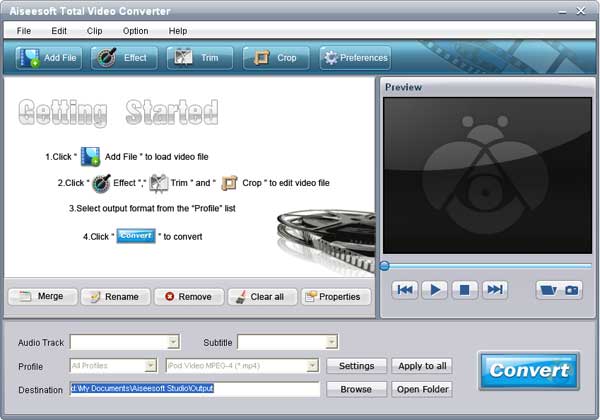
Click "Add File" to import files to the program.
Click "setting" to customize the parameters for output audio and video.
When you finish all the necessary settings, you can start conversion. The selected files in the file list will be automatically converted one by one after you click Start button. if you convert files that bought from iTunes Store, you need to do some setting as the image shows.
please click here to learn the full guide.

Total Video Converter

3. AnalogWhole
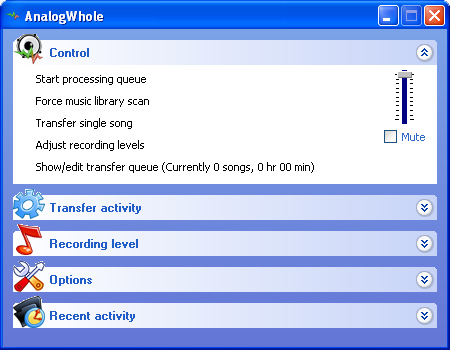
AnalogWhole (Download AnalogWhole) is a free Windows application that allows you to consolidate all your music into iTunes as MP3 files. Any music that is playable in Windows Media Player can be re-recorded as an MP3 file. Just tell AnalogWhole where your music library is, and it will automatically re-record the files as an MP3 file. In addition, it will add the converted song to iTunes for you.
With AnalogWhole you can convert all those WMA or WAV files you have that won't play on your iPod into MP3 files that will play on iPod.
The way AnalogWhole works is pretty straightforward. Almost all PC soundcards have the ability to simultaneously play music out one channel while recording music on another channel. The standard Windows audio mixer component allows the output channel to be routed back into the soundcard input channel. AnalogWhole uses the COM interface to Windows Media Player to play the music file and while it is playing, it records it and encodes it as an MP3 file. All tagging info (i.e. artist, song title, album et cetera) is transferred to the MP3 file as well.

AnalogWhole

4. Automate unDRM.
Free DRM removal from .WMV, .ASF, .WMA (Windows Media audio/video files). Included in the download pack: drmdbg, drm2wmv, DecryptIt.
You can Download Automate unDRM here.
Automate unDRM v2.0 can't crack DRM license. You must have VALID license files on your harddrive and be able to play the DRM protected files without restrictions. Automate unDRM v2.0 is intended to be used to make fair-use backups only. Please do not abuse this rule.
Automate unDRM is used to automate the DRM removal process by drmdbg and drm2wmv. drmdbg and drm2wmv don't convert your original Windows Media audio and video files, they just remove DRM header of the media file, so you get lossless conversion of DRM protected media files.
Automate unDRM works only with Windows Media Player 9 or 10.00.00.3646 (unless you update your drbdbg.exe).

5. FairUse4WM
FairUse4WM (Download FairUse4WM) can't crack DRM license. You must have VALID license files on your harddrive and be able to play the DRM protected files without restrictions.
FairUse4WM is intended to be used to make fair-use backups only. Please do not abuse this rule. FairUse4WM is a GUI version of drmdbg (DRM removal tool). drmdbg doesn't convert your original Windows Media audio and video files, it just removes DRM header of the media file, so you get lossless conversion of DRM protected media files.
FairUse4WM supports Windows Media Player 9, 10, 11 (individualization version up to .3930).
Basic requirements: Only works on individualized DRM file.
Requires Windows Media Player (WMP) 9, 10 or 11 beta 1 and 2. Although there is no support for WMP 11 final. Works with both individualized content and some DRMv1 files. Does not work with Win98 or similar.
The program's functioning can be verified by stripping DRM protection from Demo files from ezdrm.com, as well as those from other Microsoft Solution partners.
Note that some Windows Media Player installations will have multiple ECC key-pairs, so you will likely have to "Extract Keys" using multiple licensed files. If you find a file that doesn't convert, try extracting keys with it. Once your whole set of keys is extracted, you will no longer need to run Windows Media Player per file.

2010年12月18日星期六

Nokia, Silicon Valley Giant?

When one thinks of Silicon Valley tech companies, Nokia is hardly a name that comes to mind. But the company has amassed a decent presence in the Valley, with about 500 people working on everything from research to inking deals with Web giants to building the features that the company hopes will someday soon return it to the forefront of the smartphone market.

In fact, the Bay Area unit was one of the first parts of Nokia that CEO Stephen Elop visited when he took the job earlier this year–in part because the company’s board had already scheduled to have its meeting in the area.

Silicon Valley has slowly become an important spot for the company, despite the fact that Nokia doesn’t sell all that many smartphones in the U.S.

Earlier this month, the company’s area employees got a new home as Nokia consolidated nearly all of its Bay Area workers in new offices in Sunnyvale (see picture above). Each floor of the Finnish-style interior has self-standing structures that from the outside look like saunas, but are actually “privacy huts” used for small group meetings or just some alone time pondering the ins and outs of the cellphone business. Nokia kept its research labs in Palo Alto and Berkeley so they could stay close to the area’s top two universities.

The local staff is doing a range of different things. About 50 of Nokia’s Silicon Valley employees come from the company’s 2008 purchase of a Norweigian company called Trolltech, which makes an application platform called QT that is used to control everything from phones to trains and more.

There are also a variety of individuals and small groups working on various product and research efforts. Kari Pulli is a Nokia Fellow who focuses on camera technology. He helped develop a panorama photo feature that is part of the latest Nokia cellphones. His team also developed an HDR photography capability–a feature Pulli reminds people was added to Nokia’s phones before Apple included it in the iPhone. He said his team is currently working on techniques to improve cellphone pictures taken in low-light conditions.

Typically, such photos are either noisy or blurry, depending on what step is taken to compensate for the lack of light. But by taking two pictures–one picture that aims to be sharp, though noisy, and another that will be a bit blurry, but have low noise–he said that a better composite image can be created.

Pulli, who was born in Finland but has spent the past four years in Palo Alto, said he is not too worried that the new Nokia chief is not Finnish. “At least he’s Canadian,” Pulli said, pointing out it’s another cold, dark place that loves hockey. (Elop does love hockey.)

While some of Nokia’s workforce is building new features, others are working on making sure that the company has partnerships with all the important companies in the valley–especially the Facebooks and Twitters of the world.

As for the research projects, they vary widely, and many are only tangentially related to Nokia’s core phone-making business.

Tico Ballagas is a user experience researcher working on how to make technology a better tool for family communications. So he’s been spending a lot of time with Elmo as part of a Family Story Play project to see if distant relatives can better connect with young relatives by reading a story to them over videoconferencing gear.

Meanwhile, Jorg Brakensiek is working with a number of German carmakers to develop a framework known as Terminal Mode, which would allow all manner of smartphones to be usable within cars without users having to stare down at a screen to make use features like maps, email and more.

What many at the offices lament, though, is the fact that so few of the people in the U.S. get a chance to appreciate their work. While Nokia certainly has its challenges globally, it is all but invisible at the cutting edge of the U.S. market. that’s because none of the major carriers here sell a subsidized model of the company’s high-end phones.

What’s worse, the phones that the carriers do sell tend to be the most basic and boring of cellular designs. The company has plans to change that next year, when it hopes the introduction of Meego-based phones will finally sway U.S. carriers to offer subsidized Nokia smartphones, ideally by next summer.

2010年12月16日星期四

D@CES: What Happens to Twitter’s Dick Costolo in Vegas Stays on ATD

After our successful D: Dive Into Mobile conference last week, the D: All Things Digital train keeps chugging away and is now headed to Las Vegas just after the new year.

There, we will do a second D event at the Consumer Electronics Show, which will take place from January 6 to 9, 2011.

It will, natch, be focused on the consumer electronics arena, and the big trends impacting it.

Unlike our other conferences, the D@CES program is only one afternoon, on Friday, January 7, at the Venetian’s Marcello ballroom, followed by a party at the hotel’s V Bar.

Last year’s tech execs onstage were Palm CEO Jon Rubinstein, Netflix founder and CEO Reed Hastings and Google’s Android chief Andy Rubin.

This year, the trio will be: Twitter CEO Dick Costolo, Nvidia co-founder and CEO Jen-Hsun Huang and Dean Hachamovitch, who heads the Internet Explorer team within the Windows unit at Microsoft.

Costolo (pictured here), a longtime entrepreneur, took over from co-founder Evan Williams earlier this year and is charged with turning the microblogging service into a real-live boy, um, company.

Twitter is making a big push into the mainstream and also wants to be present for all the many devices shown at CES.

BoomTown will be grilling Costolo. Well done, I hope!

Nvidia’s Huang (pictured here) is leading a big change for the company. Although known for its PC graphics chips, Nvidia is shifting an increasing amount of focus to other areas, such as mobile chips with its Tegra line.

Huang will be interviewed by Mobilized’s Ina Fried.

Walt Mossberg will take on Hachamovitch (pictured below), who heads the IE team at Microsoft.

Well known for sporting a different black shirt featuring a different saying made up of the IE logo and letters at every keynote speech, he has been at the software giant since 1990.

We thought bringing his voice was important, since Hachamovitch has been focusing on privacy using the browser, an increasingly key topic in tech.

D@CES is invitation only, but if you want to go, email me at Kara@AllThingsD.com and I will send an invite, as long as supplies last.

2010年12月15日星期三

The Gawker Hack Ripple Hits LinkedIn

Gawker Media is still cleaning up the mess left by a hacker attack this weekend, but now other sites have their own work to do. That’s because Gawker commenters who had their logins and passwords exposed may have used the same combinations on other sites, creating more headaches.

Example 1: Twitter saw a rash of promotional tweets for a bogus berry weight-loss product, the result of a security breach thought to be connected to the Gawker break-in.

Example 2: LinkedIn has temporarily disabled the accounts of any users whose email addresses turned up in the public database of hacked accounts. It’s asking those users to reset their passwords.

LinkedIn PR guy Hani Durzy says the move, which started yesterday afternoon, has only affected a “small fraction” of LinkedIn’s 85 million members. He says the social network made the decision proactively, not because it had any evidence that any accounts had been misused; LinkedIn now has a blog post on the topic.

Some context/math: Gawker has said it has had to notify users of 1.5 million email addresses to change their passwords following the break-in.

If, for argument’s sake, half of those emails belonged to LinkedIn users, that would be less than one percent of the company’s user base. And likely much less: For some reason I have two emails connected to my single LinkedIn account. And both were exposed during Gawkergate, so I got two emails this morning.

No real debacles so far, but that doesn’t mean we won’t see them. Who’s next?

2010年12月13日星期一

How to download torrent video and put torrent video to iPod, iPhone, etc

无法查看这则摘要。请 点击此处查看博文。

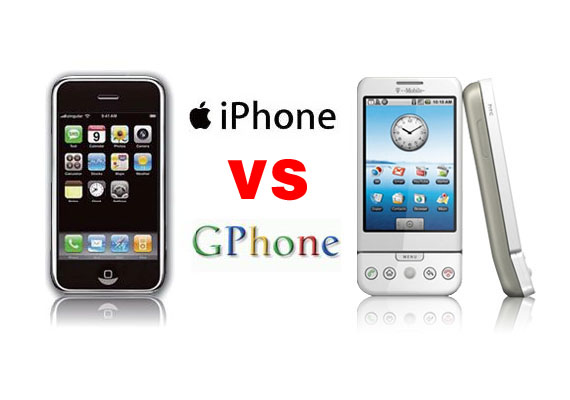
Gphone vs iPhone, which is better?

As iPhone is the most talked about smart phone on the planet and it has won millions of hearts of users by his multi-touch screen and other powerful/beautiful design. Of course, iPhone has brought so much money for Apple.
On 23rd, Sep 2008 Google released G1 and claimed that they will have a share of the big market of smart phone.
So, which is better about iPhone and G1? That maybe asked by many people who want to buy a new phone. Here I will give some of opinion about G1 and iPhone.
I will compare these two phones in three aspects, hardware, software, and their performance as a media player.

Gphone vs iPhone

Part 1: Hardware.

1. The price and storage memory
First, the price and storage memory is what I concern most, for iPhone $199 8GB, $299 16GB, for G1 $179 1GB. When you see this you will say G1 is $20 lower than iPhone but G1 is only 1GB and you will pay another $40 for an 8GB SD Card. So I think iPhone win in this round.

2. Appearance
iPhone is 133 grams/4.7 ounces and G1 is 158 grams/5.57 ounces. G1 is taller while iPhone is thinner (G1: 117.7*55.7*17.1, iPhone: 115.5*62.1*12.3).

3. Mobile Network
For mobile Network, they both have Quad Band GSM/EDGE UMTS, but G1 uses T-Mobile-only US 3G and iPhone uses AT&T-only US 3G.

4. Touch screen and input
About touch screen display, iPhone has Multi-touch 3.5 480*320 163 ppi, but G1 does not support mulit-touch. And in input aspect, G1 uses keyboard, Trackball, 6 buttons and touch screen, while iPhone has home button and multi touch screen.

5. Expansion
In expansion ports, G1 uses SD, ExtUSB(USB+audio) but iPhone has headphone, Dock connector (USB+ audio, video, remote). They have the same wireless WiFi 820.11b/g Limited Bluetooth 2.0 EDR.

6. Others
About hardware, the two phones perform almost the same and the only big difference is the iPhone uses multi-touch screen and G1’s camera is better than iPhone. And iPhone has a 1400Ah battery with 300 hours standby time but G1 only has a 1150Ah battery with 5 hours talk time and 130 standby.

Part 2: Software.

iPhone and G1 are both using Webkit as their browser engine. In media playback aspect, iPhone supports music, audiobook, video, streaming, downloads and rental, while for G1, only music playback. G1 has Android Market as its third party software store while iPhone has iPhone app store. G1’s platform is Modified Java development and iPhone uses Cocoa Touch.

Part 3: Their performance as media player.

G1 supports H.264, 3GPP, MPEG4, Codec 3GP video and MP3、AAC、AAC+、WMA、MPEG4、WAV、MIDI、REAL、AUDIO、OGG audio formats.
iPhone supports AAC,Protected AAC,MP3,MP3 VBR,Audible (formats 1, 2, 3), Apple Lossless, AIFF, WAV audio formats and H.264 (up to 1.5Mbps), MPEG-4 (up to 2.5Mbps) 640*480, 30fps, AAC-LC (up to 160 Kbps), 48kHz dimensional sound .m4v, .mp4 and .mov format.

Amazon MP3 Store allows you to download 6 million songs without the DRM protection, 89 cents per song. It is similar with the Apple iPhone, you need to pay for the video and audio sources on the Apple store. But how to get free sources for your G1.

For iPhone and G1 you can buy songs and videos from store, which is really expensive, and you can also make songs and videos for your iPhone and G1 by yourself, you just need to convert your DVDs and videos to mp4 format and then you can put them easily to your iPhone and G1.

Here I recommend you Aiseesoft DVD Converter Suite, it includes Best DVD Ripper, Total Video Converter and iPod to Computer Transfer.
For Mac user, I recommend you Aiseesoft DVD Converter Suite for Mac, it includes DVD Ripper for Mac and Total Video Converter for Mac.

2010年12月12日星期日

How to Copy DVD, Rip DVD, Convert Video on Mac

Many friends want to share their home-make DVDs and their DVD movies with others and also they always feel difficult to do that. Today I will share you a really easy way to Copy DVD to another DVD disc, DVD image ISO, or a DVD folder. Also I will also introduce you how to rip DVD and convert videos on Mac.

Part 1: How to copy a DVD to another DVD disc/DVD image ISO/DVD folder on Mac
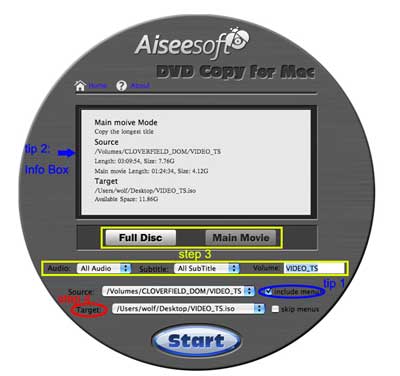
Step 1: DVD Copy for Mac.
To copy a DVD on Mac, you need a DVD Copy for Mac to help you. Aiseesoft DVD Copy for Mac is a good choice.

DVD copy for Mac

Step 2: Load Your Source
This excellent DVD copy for Mac allows you to load DVD folder and DVD image ISO.

Step 3: Choose Output Info
1. "Full Disc" or “Main Movie”
This DVD copy for Mac enables you to copy the full disc and also the main movie according to your need.

2. "Audio", "Subtitle" and "Volume" name
You can choose your output audio from the "Audio" drop-down list, such as "all audio"/ "None"/ or some audio the DVD provide.

Subtitle is always an important thing, you can choose your output subtitle in "Subtitle" drop-down list.

You can also name your output volume's name

Step 4: Choose Your Target
You can copy your DVD to another DVD disc, DVD folder or DVD image ISO.

Tips:
1. You can also choose to copy the menus or not.
2. All the info you choose will be displayed on the "Info Box".

Part 2: How to rip DVD to video formats on Mac

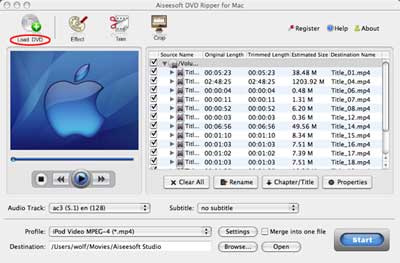
Step 1: Download Aiseesoft DVD Ripper for Mac.

Step 2. Load DVD
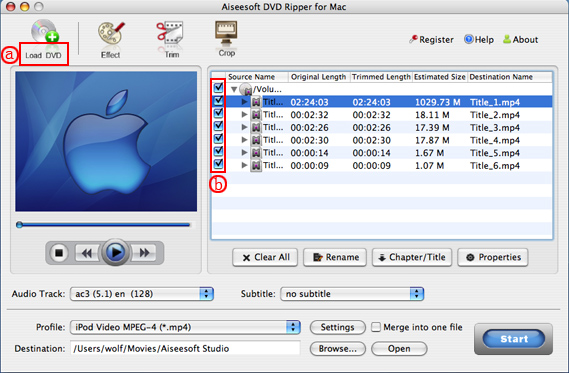
Insert DVD into your DVD-ROM, run DVD Ripper for Mac, click "Load DVD", find the DVD folder of the movie you want to add from your DVD-ROM, and Click "Open".

DVD ripper for Mac

Step 3. Set output format.
This best DVD ripper for Mac provides you output formats as many as you want. Just choose one from the drop down list "profile" according to your portable player.

Step 4: Conversion
You can just Click "Start" to begin your conversion.

Part 3: How to Convert Video files on Mac

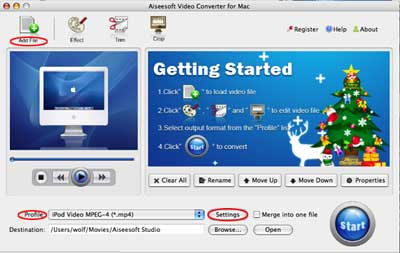
Step 1: Download Aiseesoft Video Converter for Mac

video converter for Mac

Step 2: Load video
Easily click "Add File" to load your video that you want to convert.

Step 3: Choose output profile and settings
At the bottom of the interface there are a drop-download list named "profile". You can choose your output format here.

Tips:
1. Trim
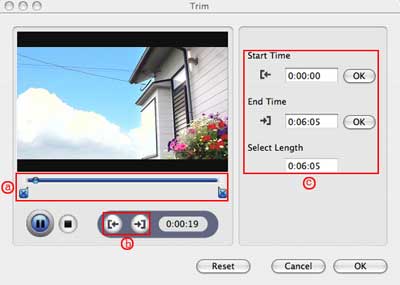
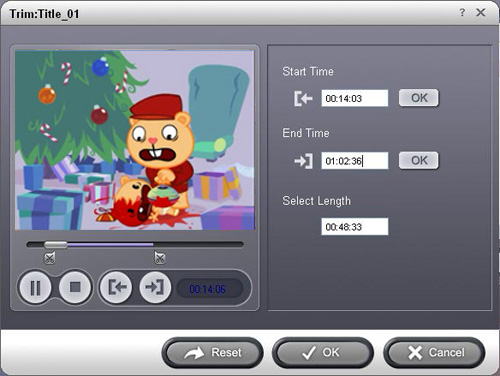
If you want to pick up a part of the video to convert, please click "Trim" button and drag the "Start trim slider" to set the start time and "End trim slider" to set the end time. (a) You can also do that by clicking the "Start trim button" and "End trim button" (b). The third way you do that is set the exact Start/End time at the right of the pop-up window and click "OK".(c)

trim

2. Crop
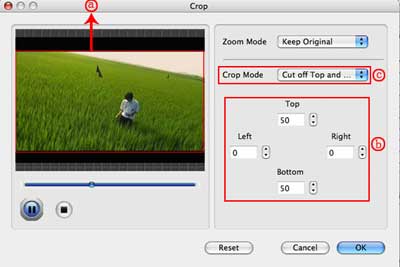
If you want to remove the black edges or you want to convert a certain area of your video, please click the "Crop" button. You can do this either by drag the frame around the movie (a) or set the crop value: "Top, Left, Bottom, Right".(b). Another way to do that is choose models from "Crop Mode"(c).
Aiseesoft Video Converter for Mac also allows you to chose the output aspect ratio above the crop pane, "Keep Original, full screen, 16:9 and 4:3" are available.

crop

3. Effect
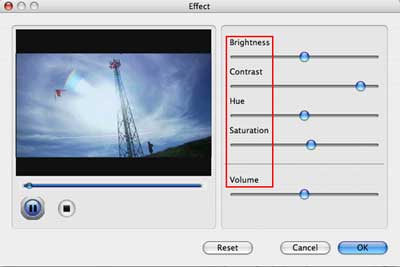
If you want to adjust the effect of your movie, please click the "Effect" button and a pop-up effect window will appear. It allows you to edit your movie’s effect including "Brightness, Contrast, Hue, Saturation and Volume".

effect

2010年12月10日星期五

YouTube Lets Some of You Go Longer, Removes 15-Minute Upload Cap for “Selected Users”

YouTube users send up a staggering 35 hours of video to the site every minute. And now that number is going to get even bigger: Google’s video site will start letting “selected users” go past the 15-minute time limit it had previously placed on most user uploads: “As long as it’s your original content, it’s fair game regardless of length.”

2010年12月8日星期三

RIM in a Four-Horse Race for Third Place

Research in Motion may be a global leader in the mobile email market, but in the fast-developing smartphone sector it’s just another company battling for the right to third place. That’s Gleacher & Company analyst Mark McKechnie’s take on the BlackBerry maker and, frankly, after RIM co-CEO Mike Lazaridis’s strained–and at times nonsensical–performance at D:Dive Into Mobile yesterday, it’s perhaps easier than it should be to agree with him.

In a pessimistic note to clients Tuesday, McKechnie said he expects RIM to lose share in the smartphone market as the company’s growth, which has not paced that of the broader industry, slows further. RIM’s battle now is not a battle for smartphone dominance, but for relevance–the same one being fought by Nokia, Microsoft and Hewlett-Packard’s Palm unit.

“[RIM is in a] battle for third,” McKechnie wrote. “We see Apple and [Google] as the clear top two players, with 18 percent and 23 percent smart phone share in CY11, growing to 20 percent and 26 percent in CY12. The battle for third place is getting more competitive as we watch RIM, Nokia, Microsoft and Palm compete to build an ecosystem behind Apple and Google.”

A very different assessment than this one offered by Lazaridis yesterday: “BlackBerry is becoming No. 1 around the world….This is a huge market, and we have a front-row seat.”

2010年12月7日星期二

Flurry, the Apps Analytics Start-Up That Enraged Steve Jobs, Raises $15 Million

Some start-ups might curl up and die when Steve Jobs singles them out for criticism. But Flurry seems to be doing okay: The app analytics company, which enraged Jobs by peering into Apple’s iPad launch plans and publishing the results, has raised another $15 million in a round led by Menlo Ventures. Existing investors Draper Fisher Jurvetson, InterWest, First Round Capital and Union Square Venture re-upped, too.

2010年12月6日星期一

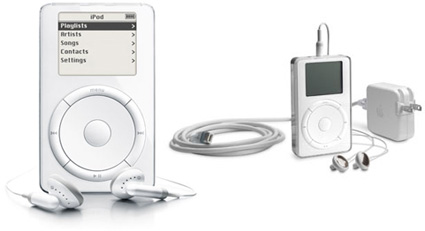
The iPod Family(Part 1)

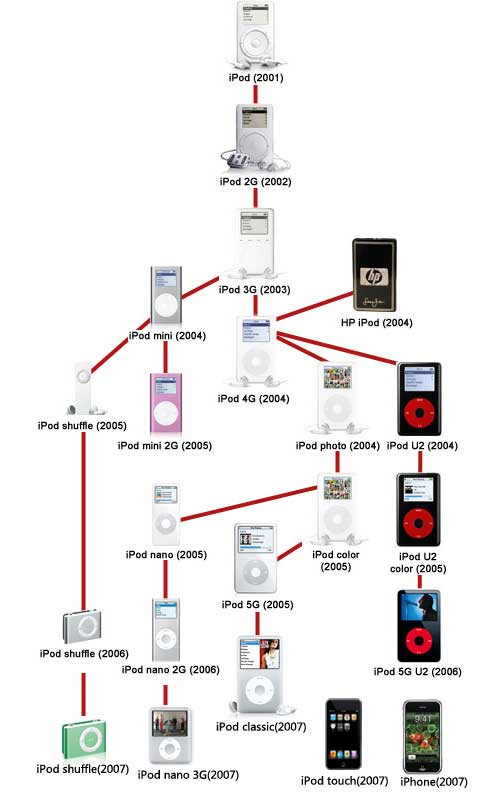
We're hard pressed to say the iPod family's fallen on particularly hard times, but being under such excruciating public scrutiny can take its toll on any dynasty; especially in a year like 2005, the family shaken to its core by so many tragic deaths. From the humble beginnings of the iPod that began the legacy so many years back, all the way up to the tragic loss of the iPod mini just yesterday, we felt it might be time to take a visit to the iPod family cemetary on this early autumn afternoon.

iPod Family
iPod family Tree

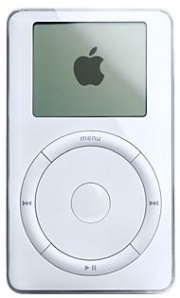
2001

first generation iPod
The first generation iPod-October 2001 - July 2002

2002
second generation iPod
The second generation iPod-July 2002 - April 2003
But a few mournful months after the passing of the 5GB iPod and the birth of the 10GB iPod, came a new 10GB iPod and the 20GB, which started at $499. Perhaps one of the least well-remembered of the iPod family, this iPod included the first non-mechanical (solid state) scroll wheel, though the center and circumference buttons remained tactile. Perhaps most groundbreaking was the official Windows support (via Musicmatch Jukebox, ironically), though the wired remote, calendar, and artist search were all significant as well. Eventually this iPod would undergo tattoos by Beck, No Doubt, Madonna, and Tony Hawk before being committed to history in April of 2003.

2003
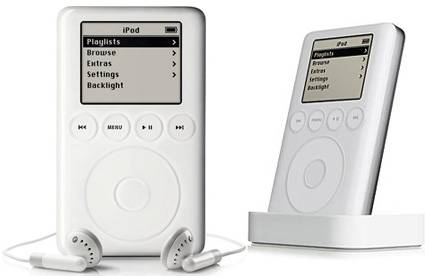
third generation iPod
The third generation iPod-April 2003 - July 2004
This was the iPod—born of humbler pedigree—that grew up, provided for itself a higher education, and made its own way in the world. The third generation of the family rid itself entirely of mechanical buttons on its body, shed some of its baby fat around the waist down to 4.1 x 2.4 x 0.62-inches, and came forth at $299 for 10GB, $399 for 15GB, and $499 for 30GB. This was also the first iPod child to feature a remote connector and dock connector—which finally enabled USB 2.0. In September the 30GB iPod was priced at $399, and a 40GB model was released for $499.

Related theme:
The iPod family(part 2)
The iPod family(part 3)
The iPod family(part 4)
The iPod family(part 5)

Recommended Products For you:
DVD to iPod Converter for Mac
It's a specially designed iPod conversion program to Convert DVD to iPod touch, iPod classic, iPod nano, convert DVD to iTunes on Leopard.
iPod Video Converter for Mac
It can convert MP4, MOV, 3GP, AVI, RM, MPEG, ASF and FLV to iPod video with high output quality and various features .

How to connect your Mac and Xbox 360

If, like me, you have your Xbox 360 placed near your wifi-enabled computer, but away from your wireless router or modem, then you'll want to take advantage of the Xbox's ability to "borrow" your computer's internet connection. For Windows users, this process is simple; it's just a matter of "bridging" your computer's wifi connection to your PC's internet port which is plugged into your Xbox. For Mac users, the process is not so easy. What follows is a guide for getting your Xbox 360 to accept Mac OS X's internet sharing option.
Before you start configuring, open up Terminal (in Applications -> Utilities) and type "ifconfig en0" (zero, not a capital-o). You're looking for the bit that says "inet xxx.xxx.xxx.xxx". In my case, the number I get here is 192.168.2.1 Second, note down the IP address of your wireless router, which in my case is 192.168.0.1

On your Mac
1. Connect your Mac to your wireless internet connection
2. Connect your Xbox 360 to your Mac via Ethernet
3. In System Preferences -> Sharing, enable Internet Sharing between your Airport and Ethernet connection

On your Xbox 360
1. Start up your Xbox and navigate to the Network settings menu
2. Under IP address, enter the number you got from the "ifconfig en0" command earlier on, but with the final number one place higher. In my case, I take the 192.168.2.1, and input 192.168.2.2 in the IP address box on my Xbox 360.
3. Under subnet, input 255.255.255.0
4. Under router/gateway, enter the number you got earlier from the "ifconfig en0" command. In my case, that's "192.168.2.1"
5. Move onto DNS. Enter the IP address of your wireless router (in my case, "192.168.0.1") in both the primary and secondary IP address fields
6. Leave PPPoE and advanced settings blank (i.e. OFF and Automatic)
7. You should now be able to connect to Xbox Live via your internet sharing Mac

This guide shows the connection of Mac and Xbox 360 is not so difficult. You can try it by yourself.

2010年12月5日星期日

How to compress DVD-9 to DVD-5 for Mac

We often use DVD to store video and data file. Varieties of DVDs are sorted by the way data stored.

DVD-9 holds 8.5GB and is supported by the DVD+R and DVD-R formats. It is also known as Single-Sided Double Layer (sometimes called Dual Layer). The official names are DVD-R DL and DVD+R DL.

DVD-5 holds 4.7GB and is supported by the DVD+R/RW and DVD-R/RW formats. It is also known as Single-Sided Single Layer.

If you want to compress Double Layer DVD-9 to Single Layer DVD-5 on Mac, you must use one Mac DVD Copy software. Download this Mac DVD Copy to have a try;

Buy NowFree trial(Intel PPC)

How to compress DVD-9 to DVD-5 for Mac

Insert your DVD and select the copy DVD mode

Select souce: Choose DVD-video disc from the source pop up menu.

Select target: From the “Target” pop up menu, select the DVD disc, and on the type of DVD disc, please select the disc type “D5(4.7GB)”(there are three types of DVD discs: D5(4.7GB) Disc, D9(8.5GB) Disc and customized disc.)

Start to compress DVD:Click “Start Copy” button to begin your DVD compressing.

learn more on: how to edit DVD file with DVD Copy for Mac.

2010年12月2日星期四

Another Top Yahoo to Depart: Global Initiatives Head Keith Nilsson

Earlier today, BoomTown reported on the departure of Yahoo’s M&A exec, Andrew Siegel, from the company.

Tonight, I got a call that another top Yahoo–Global Initiatives Group SVP Keith Nilsson (pictured here)–was also leaving the Silicon Valley Internet giant.

Nilsson, a 12-year Yahoo veteran, had run emerging markets for the company, until he was appointed in January to his new job.

Reporting directly to CEO Carol Bartz, Nilsson was focused on supporting global relationships and alliances, as well as revenue partnerships.

It’s not clear where Nilsson is going, but he might be headed to a start-up opportunity.

It’s another big blow to Yahoo, where employee morale is worsening after a series of top exec departures and the prospect of a round of layoffs in less than two weeks.

The management capabilities of Bartz are likely to get further scrutiny by Wall Street investors if this talent drain continues.

But that kind of rigorous oversight is unlikely to come from Yahoo’s ineffectual board, which–in fact–is now having a regularly scheduled meeting at Yahoo’s Sunnyvale, Calif., HQ.

Here is a question they might ask Bartz: Why is Yahoo losing so many of its execs and how are you going to stop it?

2010年12月1日星期三

Google Cuts Off AppNexus, and the Ad Tech World Shudders

AppNexus, a high-flying ad technology start-up, just had a bad few days. The next few weeks could be rough, too.

That’s because over the weekend, Google suspended the company’s access to the ad giant’s “real time” ad exchange. The move isn’t permanent, but it’s still likely to cut directly into AppNexus’s business, and it’s a very big deal for the ad tech industry.

“It’s a bombshell,” says a competitor.

AppNexus offers customers several different services, but its most important one is acting as a demand-side platform (or DSP) for clients who want to buy display advertising inventory. The bulk of that comes from Google’s DoubleClick Ad Exchange, and for now, that’s gone.

What happened? Google won’t address the incident directly, but a statement the company released today implies that it has problems with at least one AppNexus client and an ad they’ve placed:

To protect users and publishers, the Ad Exchange has extensive, widely-published policies for a range of issues including ad quality, ad content and malware. We have technologies to detect violations, and when a customer is in breach of our policies, we take action, including potential suspension from the Ad Exchange. AppNexus is a great partner, and we’re working with them through this issue to get them back on the Ad Exchange.

Via email, AppNexus President Michael Rubenstein, who left Google to join the start-up a year ago, stresses that the cutoff is “temporary,” and adds:

We’re modifying our process of working with Google to create a new arrangement whereby AppNexus clients wishing to access Google inventory will have their own individual seats on DoubleClick Ad Exchange, but will continue to serve impressions through AppNexus.

In practical terms, that means AppNexus’s ad buyers will need to set up a contract directly with Google before it lets them access its inventory again. (You can read an email Rubenstein sent to his clients on Monday, explaining the new terms, at the bottom of this post.)

That could take weeks for each ad buyer. Or they could simply take their business elsewhere and skip the process. Google itself has its own DSP, via its purchase of Invite Media earlier this year.

“I would expect a lot of these clients can’t really wait several weeks,” says Tony Katsur, general manager at MediaMath, an AppNexus competitor.

Ad industry executives tell me Google has cut off other DSPs from its ad exchange in the past. But AppNexus is a particularly high-profile player. In October, it raised $50 million in funding that included money from Microsoft, which has yet to fully embrace the “real time” display ad market itself.

Some industry insiders I’ve talked to are muttering darkly about Google sending some sort of message to Microsoft, or trying to steer business to Invite, or some other conspiratorial motives.

But none of that makes much sense to me. Google is under intense scrutiny that’s only going to get more severe. And crippling a partner–even temporarily–is the kind of thing that’s going to raise plenty of eyebrows.

Hard to imagine Google making this move lightly, and without a very good reason.
—–
Here’s the text of the email that Rubenstein sent to AppNexus clients yesterday:

From: Michael Rubenstein
Date: Mon, Nov 29, 2010 at 4:41 PM
Subject: RE: Access to Google AdX Inventory
To: Michael Rubenstein

Important Update:

Further to the notification below regarding the disruption of access to DoubleClick Ad Exchange supply, AppNexus has been in continuous contact with Google to resolve this issue. At present, Google’s position is to require all AppNexus buyers accessing Ad Exchange inventory to have a direct contract with Google in order to restore access. To be clear, this will not impact your ability to use AppNexus as your RTB platform for buying Google inventory, but simply means that you will in the future remit payment for media purchased on DoubleClick Ad Exchange to Google directly, rather than to AppNexus.

Your account manager will contact you tomorrow with details on how to proceed with restoring access to DoubleClick Ad Exchange.

We thank you for your continued patience and support as we work through this.

Regards,

Michael Rubenstein

—— Forwarded Message
From: Steven Giacomelli
Date: Sat, 27 Nov 2010 18:35:20 -0800
Subject: Access to Google AdX Inventory

Dear Client,

Beginning at 7:00 PM ET / 12:00 AM UTC, our monitoring alerted us to the fact that our real time bid requests from Google’s AdX had dropped to zero. We are investigating on our side and are also working with our contacts at Google. Currently we have no ETA for a resolution. We will update you as more details become available.

Thank you for your patience,

Steve

2010年11月30日星期二

Microsoft’s Plan B to Make Money in Phones: Patents

Although Microsoft is still hoping that Windows Phone 7 proves to be a hit, the company doesn’t see its success as the only way to make a profit from all those millions it has poured into mobile phone technology.

At a dinner with reporters on Monday night, Microsoft top lawyer Brad Smith said that the company also sees a chance to make money from its vast pool of smartphone-related patents. He wouldn’t quantify the revenue opportunity, but conceded it doesn’t expect to be able to get as much per phone as it does when someone uses its software.

That said, the overall market opportunity from patents might still be bigger, especially when you consider Microsoft’s paltry share of the phone market today.

Smith declined to put a total dollar figure on the patent opportunity or say how much it might equate to on a per-phone basis.

“We would be hard-pressed to get more for patents than we get for software,” he said. However, Smith also agreed that the patent revenue could eventually be vastly larger than what Microsoft has made to date by licensing Windows Mobile and now Windows Phone 7.

“We’d still rather sell software,” he said, but added “either way, it gives us an opportunity to recoup [our] costs.”

At the moment, there is chaos in the phone patent arena with Apple suing HTC, Microsoft suing Motorola and Oracle suing Google, to list just a partial court docket. However, Smith said he would not be at all surprised to see things shake out in the next couple years into a manageable patent licensing arrangement, not unlike the one that exists with the radio portion of a cell phone today.

About $20 per modern phone goes to patents, with the lion’s share of that going to Qualcomm. On the smartphone side, Smith said Microsoft and Apple hold the lion’s share of the intellectual property.

“I think there is a good chance the industry will work through the patent issues over the next several years,” he said.

While Smith said he can’t speak for Apple, he said that Microsoft is actively interested in licensing its patents, noting the company’s agreement with Taiwanese cell phone maker HTC (a company that makes both Android devices, as well as those running Microsoft’s mobile operating system).

“By entering into an agreement with HTC, we effectively signaled we are open for business when it comes to licensing,” Smith said.

Smith noted that Motorola and HTC, together, account for most of the Android market. This is probably the most fertile patent ground for Microsoft, since Apple and Microsoft have a patent-swap deal that covers some technologies and also both hold a fair bit of intellectual property in the area.

The generally affable Smith was not all sunshine and rainbows, however: “If we can’t get a reasonable royalty than we will seek an injunction.”

Of course, even if the monetary impact from licensing patents for phones could rival that of selling software, it lacks the strategic benefits Microsoft gets from having its operating system on phones.

Windows Phone 7 devices not only carry Microsoft’s operating system, but also versions of Office, Bing, Zune and Xbox Live.

The computing world is increasingly shifting to one in which key software runs not just on computers, but on a panoply of mobile devices as well. Microsoft itself has talked about the notion of “three screens and a cloud,” with the phone being one of those all-important three screens.

Smith says he expects the phone patent spat to spill over into the tablet arena as well, with similar issues at stake, although he expects any royalty amount to be higher for tablets than it is for smartphones.

2010年11月29日星期一

How to put DVD movie into Windows Movie Maker and iMovie

If you want to edit a DVD movie with Windows Movie Maker or import several DVD clips into Mac iMovie to build a new DVD, but you get frustrated with the DVD format, this guide may help you solve the problem.

Before you get started, it will be helpful if you learn something about the DVD, WMM and iMovie.
General DVDs have CSS copy protection in MPEG-2 or VOB format.
(Windows) Windows Movie Maker supports WMV, AVI and MPG video files.
(Mac) iMovie accepts MOV and MPEG4 video files.

This guide includes two parts:
1. How to put DVD movie into Windows Movie Maker.
2. How to add DVD clips to Apple Mac iMovie .

Part1. How to put DVD movie into Windows Movie Maker

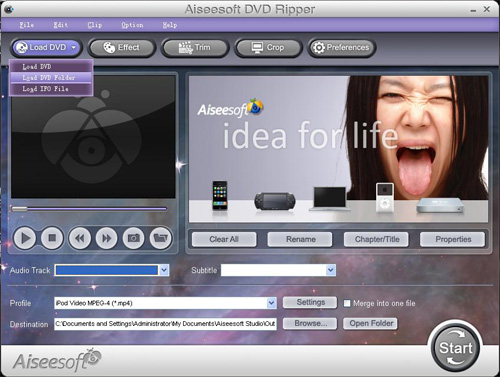
Step1. To put a DVD movie into Windows Movie Maker, you have to rip your DVD to WMV or AVI video first, and then you can load it into Windows Movie Maker. I’d prefer using Aiseesoft DVD Ripper to do this. You can get this program at: http://www.aiseesoft.com/dvd-ripper.html Then install and run it, put your DVD disc into your DVD drive, click “Load DVD” to locate your DVD file and import it, or load it by clicking “Load IFO File” to add DVD IFO file. (This DVD Ripper can rip copyright protected DVD movies, but you should remember that it’s illegal rip DVD for any business purposes)

Rip DVD with DVD Ripper for WMV

Step2. Select output format and subtitle

After you load the DVD files, click the format drop-down list to select “WMV – Windows Media Video (*.wmv)” or “AVI – Audio Video Interleaved (*.avi)” as the output format. A regular DVD movie has multiple subtitles and audio tracks, and you can select the right one for you. If you just want a certain part of the DVD movie, you can click “trim” to cut the DVD movie. Just drag the timeline bar to set the start and end time, and then blue line will be the captured parts.

Rip DVD into Windows Movie Maker

For advanced user, if you want to output higher quality video, click the “Settings” button to open the panel, here you can customize video bitrate, audio bitrate, resolution, framerate, etc. Higher bitrate will result in bigger file size.

Step 3. Start to convert

After the above steps, you just need to click “Start” and wait for the conversion to be finished. It provides the fastest conversion speed (>300%), completely support dual core CPU.

Step 4. Edit DVD with Windows Movie Maker (optional)

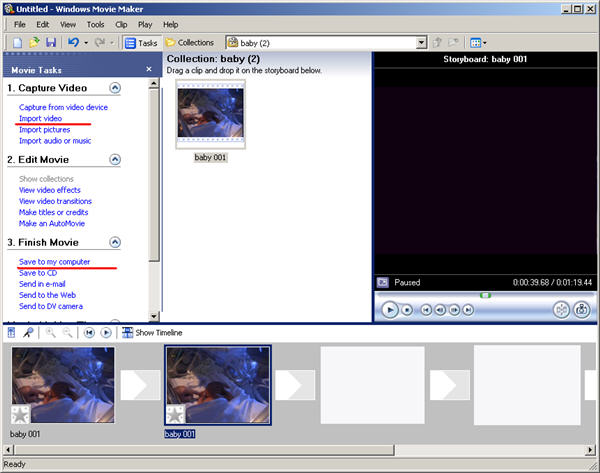
Run Windows Movie Maker, in the “Movie Task” bar, click “Add Video” to browse your computer and located the converted files, and then you can start to make personal movies.

Edit DVD with Windows Movie Maker

Tips:Many users may wonder how they can convert Windows Movie Maker file (*.MSWMM) to other video format. Actually, A *.MSWMM file is not a video file. It is a project file of Movie Maker (more like a record file). You have to open this file in Windows Movie Maker and save the movie to your computer: Go to Movie Tasks bar > Finish Movie > Save to my computer. After that you will have a WMV file which can be converted to another video format or burned to DVD.

Part2. How to add DVD clips into Apple iMovie.

iMovie is similar to Windows Movie Maker, it supports MOV and MP4 video, so you just need to convert your DVD movie to the right format. Aiseesoft DVD Ripper has a Mac Version which supports both Mac OS Tiger and Leopard; you can download it for free from here: http://www.aiseesoft.com/dvd-ripper-for-mac.html
It is easy to use for the operation steps being similar to the windows version.

put DVD into Apple iMovie

When the conversion is finished, you can run the iMovie, build a new project, and then drag the converted files to the work space to make personal files.
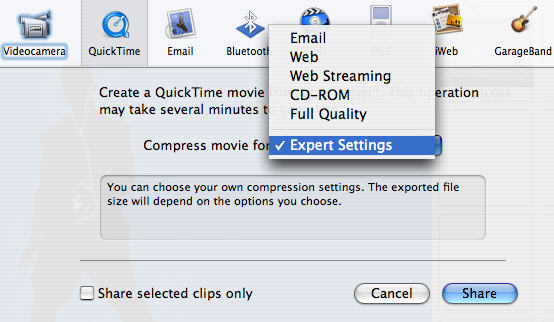
When the task is finished, In the Menu bar, Click "File" -> "Export" and save it as QuickTime video.

put DVD into Apple iMovie

Download Aiseesoft DVD Ripper for Windows (put DVD into Windows Movie Maker)
Download Aiseesoft DVD Ripper for Mac (put DVD into Apple iMovie)

2010年11月25日星期四

How to Rip DVD, Convert Video to iPhone, backup iPhone info, make iPhone Ringone For Windows/Mac

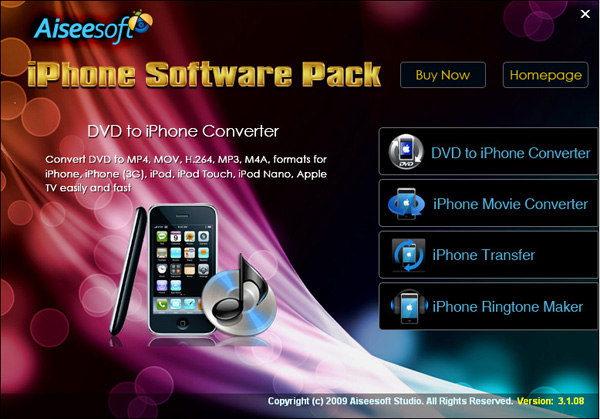
Recently, iPhone has became a really important part of our life. People use it to make a phone call, enjoy music and movies/videos, and play games. Today I will share you a really nice software pack, which can convert DVD and video to iPhone video/audio formats, backup iPhone info on your computer, and make iPhone ringtone easily.

What you need is just this nice Convert DVD Video to iPhone software

iPhone Software Pack

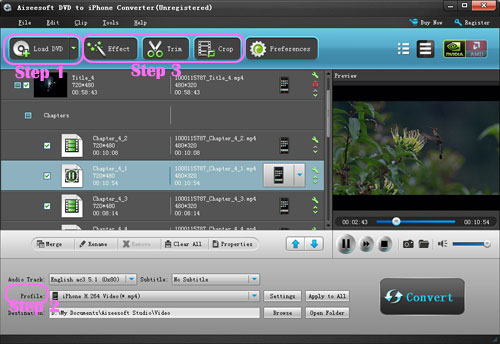
Part 1: How to convert DVD movies to iPhone
Use Aiseesoft DVD to iPhone Converter.

DVD to iPhone Converter

Step 1: Load DVD
Put your DVD in your DVD Drive and click “Load DVD” button

Step 2: Choose output profile and Settings
You can choose your output profile in the drop-list when you click profile list.
You can also adjust your settings, such as Resolution, Bitrate, so on.

Step 3: Edit Video
You can do “Trim”, “Crop”, “Merge into one file”and other video editing functions to make your video more enjoyable.

Click “Start” to begin you conversion. After few mins you can enjoy your DVD movies on your iPhone.

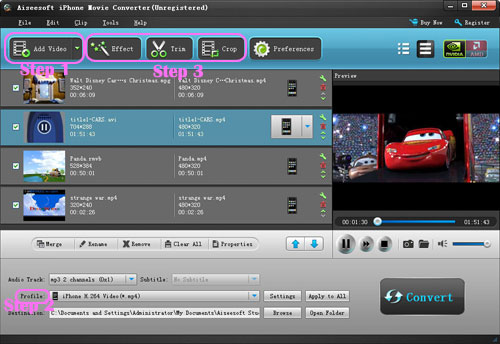
Part 2: How to convert videos to iPhone with iPhone Movie Converter

iPhone Movie Converter

Step 1: Add file
Click “Add File” button to add your video you want to put on your iPhone.

Step 2: Choose output profile and settings
You can choose your output profile in the drop-list when you click profile list.
You can also adjust your settings, such as Resolution, Bitrate and Encoder and so on.

Step 3: Edit Video
You can do “Trim”, “Crop”, “Merge into one file”and other video editing functions to make your video more enjoyable.

Click “Start” to begin you conversion. After few mins you can enjoy your videos on your iPhone.

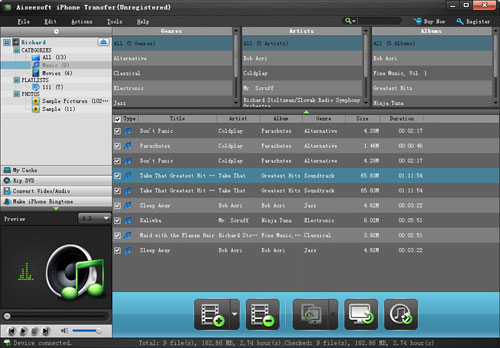
Part 3: How to transfer songs and vdieos from iPhone to computer, from computer to iPhone and from iPhone to iPhone.

iPhone Transfer

Step 1: Click iPhone Transfer
Click “Computer to iPhone”(1) button, it will allow you to transfer songs and videos from your computer to iPhone easily.
Click “iPhone to Computer”(2) button, it will allow you to backup your songs and videos from iPhone to your computer.
Click “iPhone to iPhone”(3) button, it will allow you to transfer songs and videos from one iPhone to another iPhone dirrectly.

Part 4: How to make your own iPhone ringtone

iPhone Ringtone Maker

Step 1: Click iPhone Rigntone Maker and click “Browse” on the right side of "Input File" to import the file that you want to make ringtone from i.t

Step 2: Play it and listen the music to find the segment that you want to use it as ringtone. Then drag and click the start& end slider to set your wanted segment, or type the start & end time in the corresponding text box directly to get the exact segment. You also can pre-listen the converted audio before generate.

Step 3: Click “Browse” on the right side of "Local Output Folder" to choose the output destination.

Step 4: Check "Export to iPhone" option, the converted ringtone will be load to your iPhone directly.

Step 5: After all the settings are finished, click “Generate” to begin making your own iPhone ringtone.

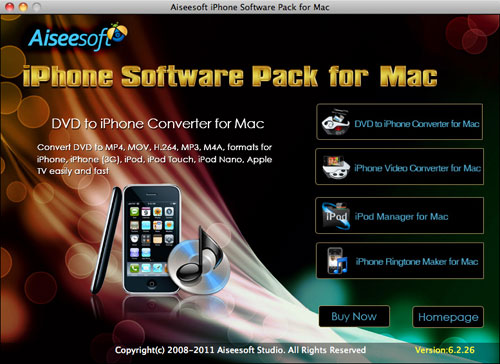
For Mac users I recommend you Aiseesoft iPhone Software Pack for Mac

Using Aiseesoft iPhone Software Pack for Mac, you can convert any video/DVD to iPhone Mac, backup the audio, video files on iPod to Mac and import audio, video files or folders from Mac to your iPod with the help of iPod Manager Mac, even make iPhone ringtone from AVI, MPEG, WMV, MP4, FLV, MKV, H.264/MPEG-4, DivX, XviD, MOV, RM, RMVB, MP3, WMA, AAC video and audio sources on Mac.

iPhone Software Pack for Mac

2010年11月24日星期三

How to use Techspansion's open source to build iSquint and VisualHub

Squint and VisualHub, the popular video converter on Mac OS X have now gone open source. They also have got new names, Film Redux (VisualHub) and PunyVid (iSquint). As you may or may not know, the developer, Techspanion has closed shop
and after an outcry from fans, it has released the source code.
You can get them here: SourceForge.net Repository - [transcoderredux] Index of /
This a tutorial on how to use Techspansion's open source to build iSquint and VisualHub.

Here are two parts:
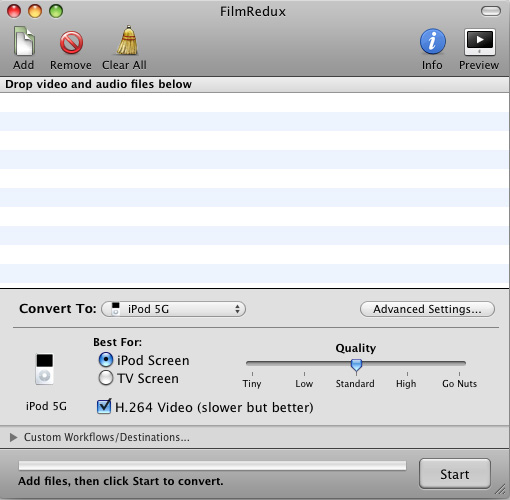
Part 1, How to use open source to build VisualHub (Film Redux)?
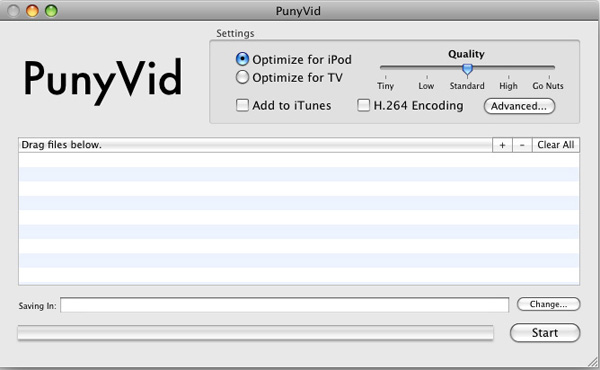
Part 2, How to use open source to build iSquint (PunyVid).

What you need:
Mac OS X 10.5, Xcode 3.0 and Techspansion's open source

Part 1, How to use open source to build VisualHub (Film Redux)?
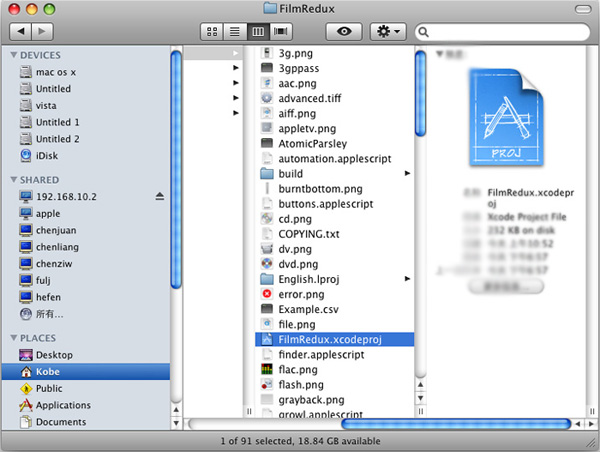
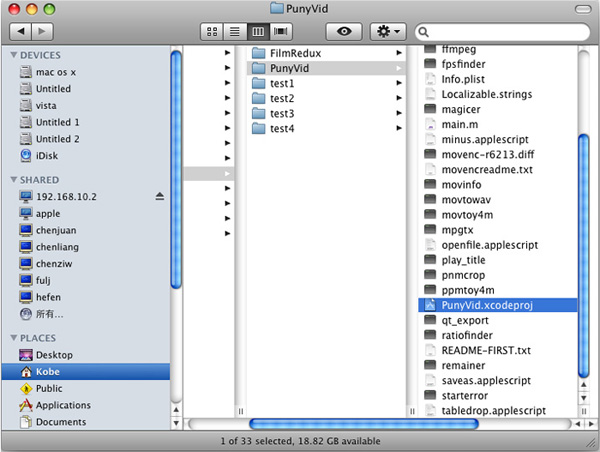
Step 1, Open the open source, you will see two folders: FilmRedux and PunyVid. Open FilmRedux and find the file "FilmRedux.xcodeproj".

FilmRedux and PunyVid

Step 2, Double click "FilmRedux.xcodeproj" to open it with Xcode.

open source

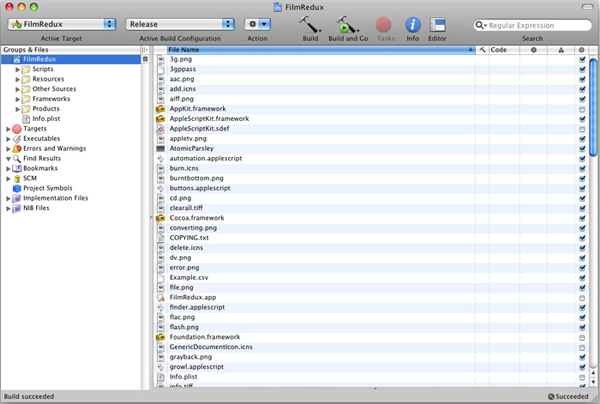
Step 3, Click the button "Build and Go" to build VisualHub (Film Redux). That's all.

build VisualHub

Part 2, How to use open source to build iSquint( PunyVid)?
Step 1, Open the open source, you will see two folders: FilmRedux and PunyVid. Open PunyVid and find the file "PunyVid.xcodeproj".

open source

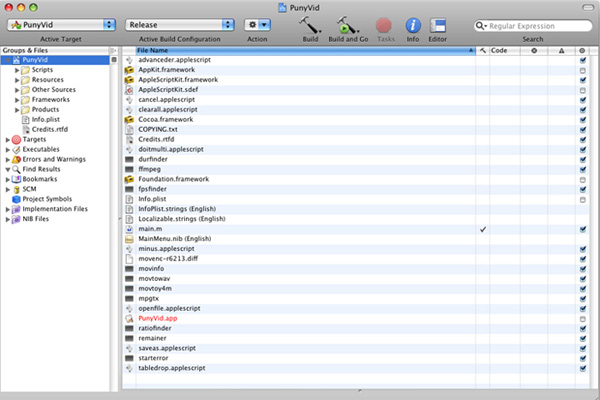
Step 2, Double click "PunyVid.xcodeproj" to open it with Xcode.

open source

Step 3, Click the button "Build and Go" to build iSquint (PunyVid). That's all.

 build iSquint

The operation is simple, but the stability would be a great concern, it kept reporting error messages during my try which is really frustrated. Perhaps it's not wise enough to spend hours coping with those errors messages, as there must be some commercial programs that perform much more reliably, like the Video Converter for Mac.
If you want to convert videos to DVD, here is DVD Creator for Mac.

Hollywood’s Big Hope: Google Shows Up With Suitcase Full of Money. It Could Happen!

Here’s a script Hollywood has been pitching for some time: Google comes to town with a checkbook in hand.

It hasn’t happened yet, but the longer the company struggles to break into the market for “premium full-length content”–movies and TV shows–the more you hear studio types talking it up. And maybe Google is listening!

The New York Post reports that the search giant is in talks to buy the digital rights to Miramax’s movies; Disney is about to sell the studio off to Filmyard Holdings.

The supposed deal makes plenty of sense on paper: Google finally gets its hands on movies people want to see–”No Country for Old Men,” “Pulp Fiction,” a lot of very earnest indie films from the mid-’90s, etc.–and Filmyard gets an instant cash infusion to help defray the cost of its acquisition.

To date, Google has struggled to get the big studios to let it put their content up–for free or for rent–which is why many Hollywood types have suggested that the company simply purchase a “Google window,” by buying a studio or a piece of a studio.

You can see why Hollywood would be pushing for a deep-pocketed suitor to show up. And you can see why Google has been resistant to that idea: If it starts writing checks to Hollywood, then every content player, everywhere, will expect the same thing. And Google has always insisted that it’s not in the content business, period.

But that’s getting harder and harder to believe, as the company spends more and more time trying to beef up its media offerings (see, for instance: Google Music, if it shows up).

Meanwhile, the ability and willingess to write big checks is directly connected to the Netflix Web success story: So far Reed Hastings and company have racked up a billion-dollar-plus bill for digital content rights, and that number is going to keep climbing.

Which is why it’s significant that Google hired Netflix executive Robert Kyncl to hammer out Hollywood content deals earlier this year. A big-dollar Miramax deal would indicate that he’s working from the same playbook he used at his last gig.

2010年11月22日星期一

Google Pushing Chrome So Hard It’s Buying…Print Ads?

Google has so much money and is so intent on pushing its Chrome browser that it’s willing to put marketing dollars into the weirdest places.

Like a print newspaper.

Search Engine Land’s Danny Sullivan was flipping through the Sunday edition of the Los Angeles Times yesterday and stumbled into this Chrome ad (click image to enlarge). It’s a reference to Google’s head-scratching “Things I Learned About Browsers” e-book.

This is the part of the post where I’m supposed to point out how ridiculous it is for a Web company to advertise anything at all in offline media. And how especially ridiculous it is for someone to advertise a browser in a newspaper.

But then again: It worked!

(Almost as surprising: Search guru Danny Sullivan routinely reads the print version of the LA Times!)

Looks Like Facebook Connect Is Coming to Myspace Tomorrow

Myspace and Facebook have just invited the press to a joint GoToMeeting webinar (how very not social media!) tomorrow at noon PT. The announcement comes on the heels of a report from the Telegraph on Wednesday that Myspace plans to integrate Facebook Connect “imminently.” Plus, Myspace recently (and perhaps accidentally) introduced a “login with Facebook” option on its sign-up page that was non-functional, as Inside Facebook noticed.

Facebook VP Dan Rose

Presenting at the webinar will be Myspace CEO Mike Jones–who has been pitching Myspace as “a social entertainment destination” rather than a social network–and Dan Rose, VP of Partnerships and Platform Marketing for Facebook.

Myspace adding Facebook Connect has been rumored for so long you’d think it had already happened, so hopefully there will be more to the deal than that.

If things go as heralded, this will be the first Facebook announcement in a long time where CEO Mark Zuckerberg has not spoken for the company. Dan Rose is a former Amazon guy who joined Facebook in 2006. He has recently spoken on Facebook’s behalf about a partnership with Microsoft’s Bing to give it social data to improve search, and EA’s five-year exclusive Facebook Credits deal. Rose was previously Facebook’s VP of business development and monetization, and according to Kara Swisher was the main negotiator in Facebook’s failed effort to buy Twitter a couple of years ago.